

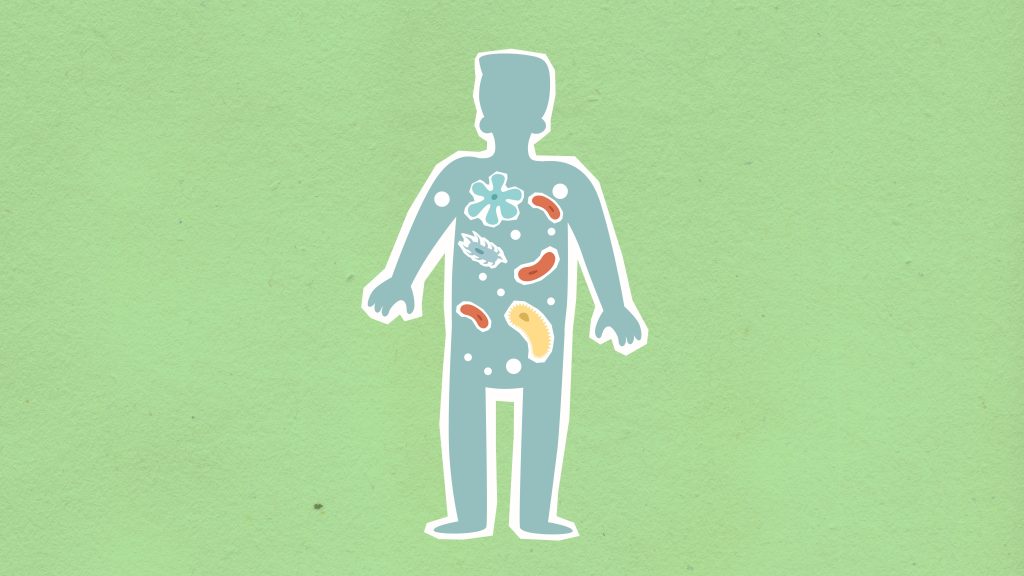
Have you ever felt “butterflies” in your stomach before a big presentation, or had a “gut feeling” about a decision? That is not just a figure of speech. You actually have a “second brain” hidden right inside the walls of your digestive system. Scientists call this communication network the gut-brain axis. It is a two-way biological highway connecting your brain and your intestines. Trillions of microscopic organisms, mainly bacteria, live inside your gut, constantly sending signals back and forth to your brain. These tiny microbes influence everything from your daily mood and stress levels to memory and long-term brain health.
Deep inside the lining of your esophagus, stomach, and intestines lies a complex network of over 100 million nerve cells, known as the Enteric Nervous System (ENS). While your main brain handles thoughts, memory, and decision making, your gut’s second brain manages the day-to-day work of digestion, like breaking down food and absorbing nutrients. Even though your gut can run many of its digestive tasks on autopilot, it stays in constant, real time contact with your brain. The primary superhighway for this communication is the vagus nerve, a long nerve path that runs straight from your brainstem down into your abdomen. About 80% of the messages traveling along the vagus nerve go upward, meaning your gut is talking to your brain far more often than your brain is talking to your gut.
Your gut is home to trillions of bacteria, collectively known as the gut microbiome. These microbes digest the food you eat and release chemical messengers that interact with your body and brain. For instance, around 90% to 95% of your body’s serotonin, the chemical that helps regulate mood, anxiety, and sleep, is actually produced in your gut by specialized cells, while gut microbes also help produce other calming chemicals like GABA. Additionally, when you eat fiber-rich foods, your gut bacteria ferment them into beneficial compounds called Short-Chain Fatty Acids (such as butyrate and acetate) that protect the brain, calm inflammation, and feed the cells lining your gut. At the same time, about 70% to 80% of your body’s immune system resides in your gut. When gut bacteria are out of balance, the gut lining can become compromised or “leaky,” allowing harmful bacterial byproducts like lipopolysaccharides (LPS) to slip into the bloodstream, trigger systemic inflammation, and send stress signals directly to the brain.
Because the gut and brain are so closely linked, a problem in one often shows up in the other. For years, doctors thought anxiety and depression caused digestive issues like Irritable Bowel Syndrome (IBS). Researchers now know it works both ways: irritation in the digestive tract sends distress signals to the brain, which can directly trigger mood changes, anxiety, and low energy. Similarly, recent studies show that lingering post-viral symptoms, like brain fog and fatigue, may stem from the gut, where persistent viral activity can reduce serotonin levels and disrupt vagus nerve signaling. In neurodegenerative conditions like Parkinson’s disease, misfolded proteins (like alpha-synuclein) may actually start forming in the gut years before movement problems appear, traveling up the vagus nerve directly into the brain and explaining why chronic constipation often shows up a decade or more before traditional Parkinson’s symptoms.
The good news is that because this relationship works both ways, taking care of your gut is a powerful way to protect your brain. Eating a wide variety of high-fiber foods like vegetables, beans, berries, and whole grains feeds beneficial gut bacteria, helping them produce brain-protecting short-chain fatty acids. Adding fermented foods like yogurt, kefir, sauerkraut, and kimchi introduces healthy bacteria directly into your digestive system to support microbial diversity. Finally, managing stress through practices like deep breathing, exercise, and good sleep helps protect the gut environment, preventing changes in gut motility and keeping vagal signaling smooth.
Sources and additional readings
https://pmc.ncbi.nlm.nih.gov/articles/PMC4367209/
https://pmc.ncbi.nlm.nih.gov/articles/PMC6469458/
https://www.hopkinsmedicine.org/health/wellness-and-prevention/the-brain-gut-connection
https://med.stanford.edu/news/insights/2025/03/gut-brain-connection-long-covid-anxiety-parkinsons.html
https://journals.physiology.org/doi/full/10.1152/physrev.00018.2018